




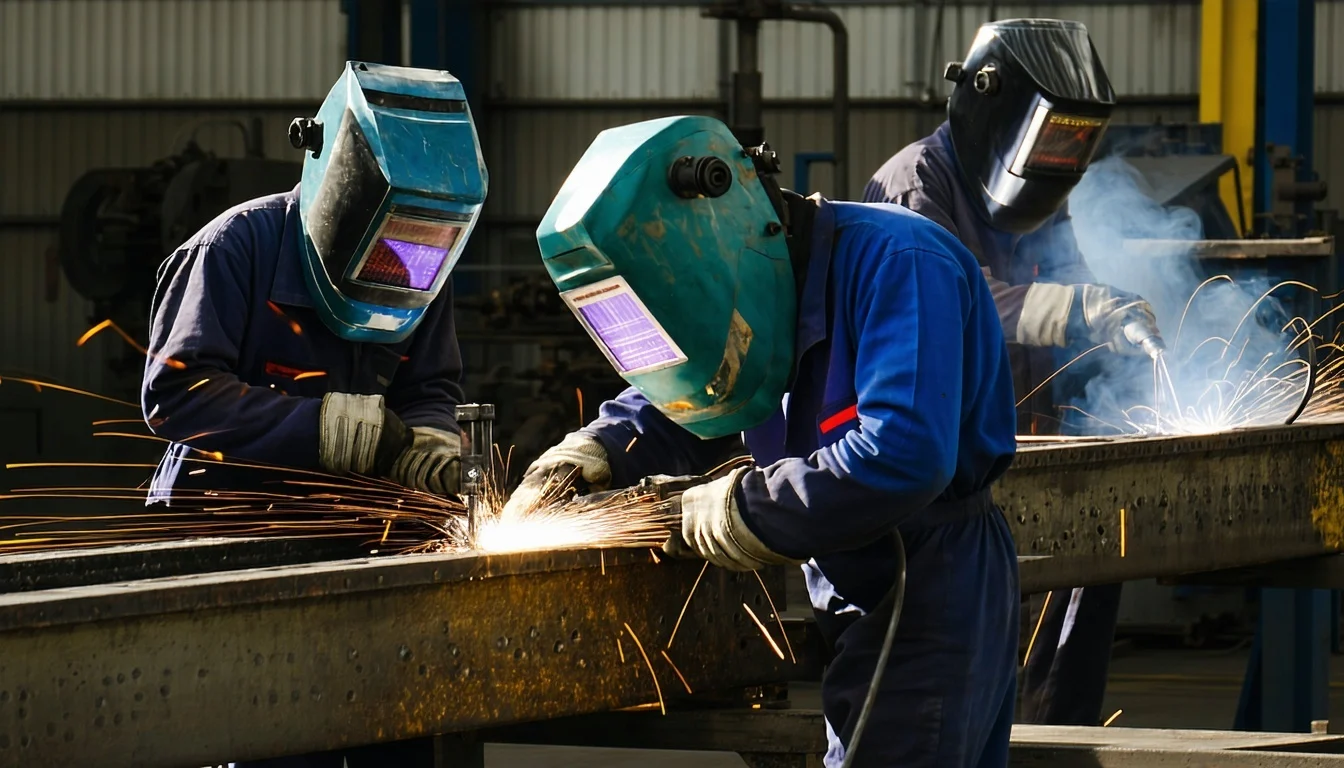
Welding is one of the most in-demand and future-proof trades across construction, manufacturing, shipbuilding, automotive repair, and industrial maintenance. As infrastructure projects grow and skilled tradespeople retire, companies urgently need new welders—offering apprenticeships, paid training, and clear promotion opportunities.
Whether you’re starting from zero or already welding and want higher pay, this guide walks you through how to upgrade your skills, earn advanced certifications, and build a long-term welding career.
Why Welding Remains a High-Demand Career
1. Shortage of Skilled Welders
Across the U.S., Canada, and the UK, employers report significant shortages as experienced welders age out of the workforce. Many projects face delays simply because there aren’t enough certified welders available.
2. High Income Potential
Welding doesn’t require a university degree, yet advanced certifications can lead to
$70,000–$120,000+ per year depending on specialization.
High-risk or high-precision work earns even more.
3. Industry Growth
From renewable energy and electric vehicle manufacturing to bridge repair and oil pipeline work, welding remains essential in every major sector.
Step 1: Master the Fundamentals of Welding
Before advancing to higher-level certifications, you must be confident in core welding skills.
Basic Skills Every Welder Needs
-
Arc control
-
Torch angle and travel speed
-
Bead consistency
-
Metal preparation & cleaning
-
Understanding of heat input
-
Safety awareness and PPE use
Beginner Welding Processes
-
SMAW (Stick Welding)
Great for outdoor or repair work; one of the most versatile processes. -
MIG (GMAW)
Easy to learn and used widely in manufacturing and automotive repair. -
Flux-Core (FCAW)
Good for thicker materials and structural welding. -
TIG (GTAW)
High precision; used for stainless steel, aluminum, and specialist fabrication.
Beginners usually start with MIG or Stick, then progress to TIG for higher-end career paths.
Step 2: Build Real-World Welding Experience
Classroom learning is important, but welding is a hands-on skill that demands practice.
Where to Get Experience
-
Technical schools
-
Union apprenticeships
-
Community college programs
-
On-the-job trainee programs
-
Entry-level shop positions
Practice Goals for Beginners
-
Produce clean, repeatable beads
-
Control distortion in metal
-
Weld in different positions (flat, horizontal, vertical, overhead)
-
Learn basic blueprint reading
The more positions you can weld in confidently, the faster you’ll advance.
Step 3: Choose Your Welding Career Path
Welding offers multiple specializations, and each requires different skills and certifications.
Most Common and Well-Paid Welding Paths
1. Structural Welding
-
Bridges
-
Buildings
-
Industrial facilities
Requires strong stick or flux-core skills.
2. Pipe Welding
-
Oil & gas
-
Chemical plants
-
Refineries
Highest-paying specialty for skilled welders.
3. TIG Welding
-
Aerospace
-
Food-grade stainless steel
-
Precision fabrication
Valued for clean and high-quality welds.
4. Underwater Welding
High-risk, extremely high pay; requires a commercial diving license.
5. Industrial/Repair Welding
Shops, trucking fleets, heavy equipment repair.
Choose your path early so you can train toward the right certifications.
Step 4: Earn Key Certifications to Boost Pay
Your income as a welder depends heavily on certifications. Employers don’t just want skills—they want documentation.
Entry-Level Certifications
-
AWS D1.1 Structural Welding (USA)
-
CWB Level 1 (Canada)
-
BS EN ISO 9606-1 (UK/Europe)
These qualify you for basic structural work.
Intermediate Certifications
-
MIG aluminum certification
-
Multi-position flux-core certification
-
Pipe welding tests (6G position)
Advanced & High-Pay Certifications
1. 6G Pipe Welding Certification
The gold standard for pipe welders. Qualifies you for:
-
Oil & gas pipelines
-
Power plants
-
Industrial shut-down work
6G welders often earn $45–$65/hour.
2. TIG Stainless & Aluminum Certification
High demand in:
-
Aircraft manufacturing
-
High-purity food processing
-
Marine fabrication
3. ASME Pressure Vessel Certification
Required for boilers, tanks, and high-pressure work.
4. Underwater Welding Certification
Top earners in the trade:
-
$100,000–$300,000/year with global travel assignments.
Step 5: Build Your Professional Welding Portfolio
As you skill up, document your progress.
What to Include
-
Clear photos of welds
-
Notes on position (1G–6G)
-
Welding process used (MIG, TIG, Stick, Flux-Core)
-
Metal type and thickness
-
Any certifications passed
-
Letters from instructors or supervisors
A strong portfolio helps you win better jobs and negotiate higher pay.
Step 6: Add Complementary Technical Skills
To grow beyond basic welding roles, add the following:
Blueprint Reading
Understand symbols, tolerances, and weld specifications.
Fabrication Skills
Cutting, grinding, bending, and assembling metal components.
Measurement & Inspection
Using calipers, gauges, and weld testing tools.
Basic Metallurgy
Know how different metals react to heat.
Safety Certifications
OSHA, confined space entry, fall protection—required on many industrial sites.
The more versatile you are, the more valuable you become.
Step 7: Move Into Higher-Paying Jobs
A typical welding progression looks like this:
-
Rookie Welder / Apprentice
-
Certified Structural Welder
-
Pipe Welder or TIG Specialist
-
Field Industrial Welder
-
Foreman or Welding Supervisor
-
CWI – Certified Welding Inspector (Very high pay)
-
Instructor, Contractor, or Business Owner
Becoming a CWI can boost your income to $80,000–$120,000+/year, often with less physical labor.
Final Thoughts: Welding Is a Career of Unlimited Growth
Whether you’re starting with basic MIG welding or aiming for advanced certifications, welding offers:
-
High job security
-
Great earning potential
-
Hands-on work
-
Clear advancement pathways
-
Opportunities worldwide
If you’re ready to upgrade your skills, choose a specialization, train consistently, and pursue certifications step by step. Within months, many welders move from basic techniques to highly paid professional roles.